

If you've ever watched a CNC machine hum through a 12-hour production run, you've probably noticed the tiny, unassuming components that keep it running smoothly-components that don't make the shop floor newsletter, but are non-negotiable for precision. As a long-time CNC bushings supplier who's walked the production floors of automotive plants, aerospace labs, and medical device factories, I can tell you this: CNC bushings are the quiet workhorses that turn "good enough" machining into reliable, repeatable work. For years, I've seen clients underestimate their role-until a machine goes down because a worn bushing let a drill bit drift a hair too far, ruining a $10,000 aluminum part. That's when they realize these small parts aren't just hardware; they're the backbone of dimensional accuracy in almost every industry that relies on CNC machining.
First, let's get clear on what CNC bushings actually are, because the term is often confused with other types of bushings used in non-CNC applications. Unlike plain bushings that might work in a backyard lawnmower, CNC bushings are precision-engineered, tight-tolerance components designed to guide cutting tools, drill bits, or linear shafts with micron-level consistency. They're usually made from materials like hardened steel, bronze, or polymer, each chosen for specific wear characteristics, and they fit into tool holders, machine tables, or workholding fixtures with almost zero play. That lack of give is why they matter so much: even a 0.001-inch gap in a bushing can cause a CNC tool to deviate, turning a perfectly machined part into scrap.
Let's start with the most obvious use case: tool guiding for CNC machining centers. If you're milling a mold for a plastic medical syringe component, the tool path has to be exactly the same 10,000 times in a row. Every time the drill or end mill passes through the material, the bushing keeps it aligned to the pre-programmed coordinates. I once worked with a medical device client who switched from generic drill bushings to our custom CNC bushings and cut their scrap rate for implant parts by 18% in three months. Why? Generic bushings would wear unevenly after 500 uses, causing the tool to angle slightly, while our precision bushings maintain tight tolerance for 10,000+ cycles with minimal lubrication. This is where material choice comes in: for high-speed aluminum machining, bronze bushings dissipate heat better than steel, preventing tool expansion that would throw off cuts. For hard materials like titanium, our hardened steel CNC bushings hold up to the high torque of the cutting tool without deforming.
Next up is linear motion control in CNC routing and lathe operations. Think of a CNC router cutting custom wooden furniture parts or a lathe turning brass electrical connectors. Both rely on linear shafts that slide along the machine's axis, and CNC bushings act as the bearing surface between the shaft and the machine's structure. Here, bushings reduce friction, so the machine can move along the X, Y, or Z axis smoothly without "stick-slip" movement-those tiny, jerky shifts that cause wavy edges on a cut. I recently supported a client who builds custom metal enclosures for industrial electronics; they were using off-the-shelf linear bushings that would seize up in their router's axis during long runs. Switching to our self-lubricating polymer CNC bushings solved the problem, allowing their router to run 24/7 for days without maintenance. That kind of reliability is critical for sectors like industrial electronics, where enclosures have to fit other components precisely-any misalignment in the linear axis means a part that can't be assembled.
Another use case that's often overlooked is workholding for custom part fabrication. When a machine shop is making a small batch of specialized parts, they need fixtures that hold the workpiece firmly and consistently. CNC bushings are embedded into these fixtures to align the workpiece with the cutting tool, so every part is positioned exactly the same way. For example, a client who does custom sheet metal junction boxes used to use simple clamps to hold panels during CNC punching. The clamps would shift, leading to holes that were off by 0.005 inches, which meant the boxes wouldn't fit together when assembled. After switching to our CNC bushings in their workholding fixtures, their hole alignment error dropped to less than 0.001 inches. If you're looking for more details on sheet metal component fabrication, you can learn more about specialized services for enclosures and junction boxes, including precision alignment features, by checking out Sheet Metal Junction Box Fabrication here: /sheet-metal-fabrication-service/sheet-metal-junction-box-fabrication.html. That's a great example of how CNC bushing precision ties directly to the quality of finished end products.
Now, let's talk about a specific sub-sector where CNC bushings are irreplaceable: aerospace component machining. In aerospace, parts have to meet strict FAA standards, with zero room for dimensional error. CNC bushings here aren't just precision parts-they're compliance enablers. For example, when machining turbine blades, the cooling holes drilled into the blade have to be perfectly aligned to ensure the blade can withstand high temperatures and pressure. A single misaligned hole can cause the blade to fail during operation, leading to catastrophic engine issues. Aerospace clients rely on our high-temperature-resistant CNC bushings, which are tested to maintain tolerance even in dusty, high-heat machine environments. They also require traceability for every component, which is why our CNC bushings are serialized-so clients can track exactly which bushings were used on which production runs, a non-negotiable for aerospace quality management systems.
Medical device manufacturing is another high-stakes area for CNC bushings. Think of parts like surgical staples, pacemaker housings, or insulin pump components-all small, precision-machined parts that go inside the human body. These parts have to be sterile, biocompatible, and perfectly sized. CNC bushings for medical machining are often made from corrosion-resistant stainless steel, since they can be cleaned with harsh sterilization agents without corroding. They also have to meet ISO 13485 standards, which means every bushing is inspected for defects down to the micron. I work with a medical device startup that makes portable insulin pumps; their CNC machines run 24/7, turning out 5,000 pump housings a day. Our CNC bushings ensure that each housing's screw holes are aligned to within 0.0008 inches, so the pump's internal electronics fit perfectly without any gaps. That kind of consistency only comes from high-quality CNC bushings-generic parts can't hold that tolerance over thousands of cycles.
Let's also connect this to broader fabrication services, because CNC bushings are part of a larger supply chain for finished metal products. For example, if you're manufacturing stainless steel enclosures for outdoor sensors, you need precision machined parts that fit together seamlessly. Our CNC bushings are used in the punching and bending tools for these enclosures, ensuring that the mounting holes and flange edges are consistent. If you're in need of specialized enclosure fabrication for your projects, our partners offer a range of services tailored to industrial and medical applications, including Stainless Steel Enclosure Fabrication here: /sheet-metal-fabrication-service/stainless-steel-enclosure-fabrication.html. This link leads to a service page that explains how precision components like CNC bushings support the quality of the final enclosure. Similarly, for sheet metal work that requires deep drawn parts-like custom containers for lab equipment-our CNC bushings help maintain the accuracy of the deep drawing dies, ensuring that each drawn part has uniform walls and no uneven stretching. You can learn more about deep drawing precision here: /sheet-metal-fabrication-service/precision-deep-draw-fabrication.html, which highlights how critical tooling components like CNC bushings are to that process.
So, what sets a good CNC bushing supplier apart from a generic hardware store? It's not just the material or the tolerance-it's understanding the application and adapting the bushing to specific needs. For example, a CNC bushing used in a high-speed wood router needs to handle dust better than one used in a steel mill, while a bushing used in a medical CNC machine needs to be autoclavable. Over the years, I've worked with clients to develop custom coatings for CNC bushings, like dry lubricants that reduce wear in dusty environments, and custom lengths that fit into non-standard machine tool holders. One automotive client even had us make CNC bushings with a non-reflective coating, to prevent glare during quality inspection, which might seem like a small detail until you realize it catches a defect that would otherwise slip through.
I often get asked: do CNC bushings ever get overlooked, and is that a problem? The short answer is yes-most shop floor managers focus on CNC machines, cutting tools, and programming, and forget that the most expensive machine is only as good as its components. A $50 CNC bushing might seem trivial, but replacing it every 6 months (instead of 2 years) adds up, while a worn bushing can ruin thousands of dollars worth of parts. I once had a client who skipped replacing their CNC bushings, only to have a batch of 200 aerospace components rejected because the tool had drifted, costing them $15,000 in scrap and delayed delivery. That's the kind of cost that makes it worth investing in high-quality CNC bushings from a reliable supplier, rather than cutting corners.
Now, if you're a machine shop owner, fabrication manager, or engineer working on a project that requires precision CNC machining, you're probably wondering if your current bushings are holding your parts back. The good news is that it's easy to test: check the tolerance of your last 100 machined parts, track how often you scrap parts due to tool misalignment, and see how often you have to replace bushings. If you're seeing signs of uneven cuts, stick-slip movement on linear axes, or inconsistent hole alignment, it might be time to switch to CNC bushings tailored to your application.
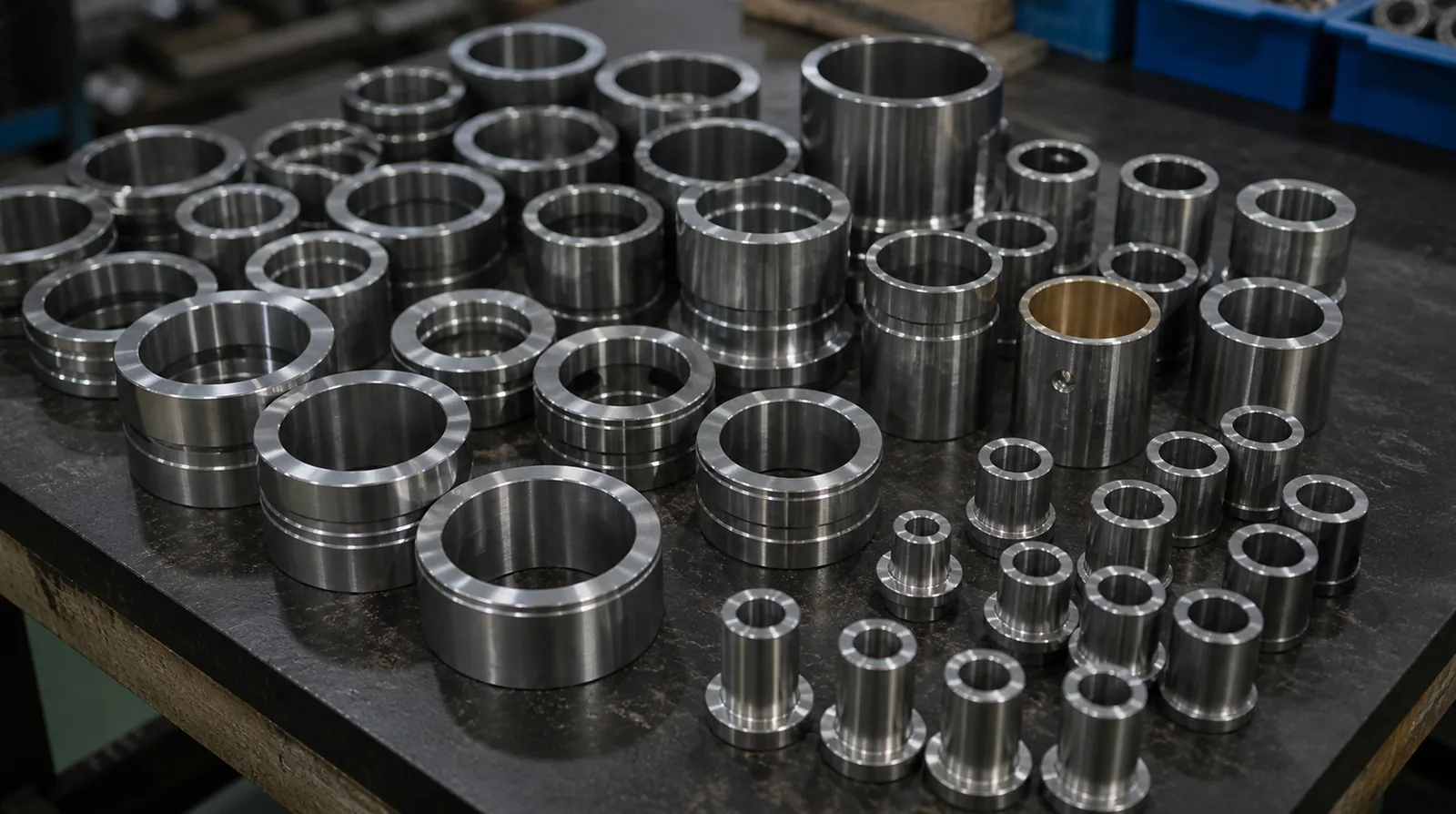
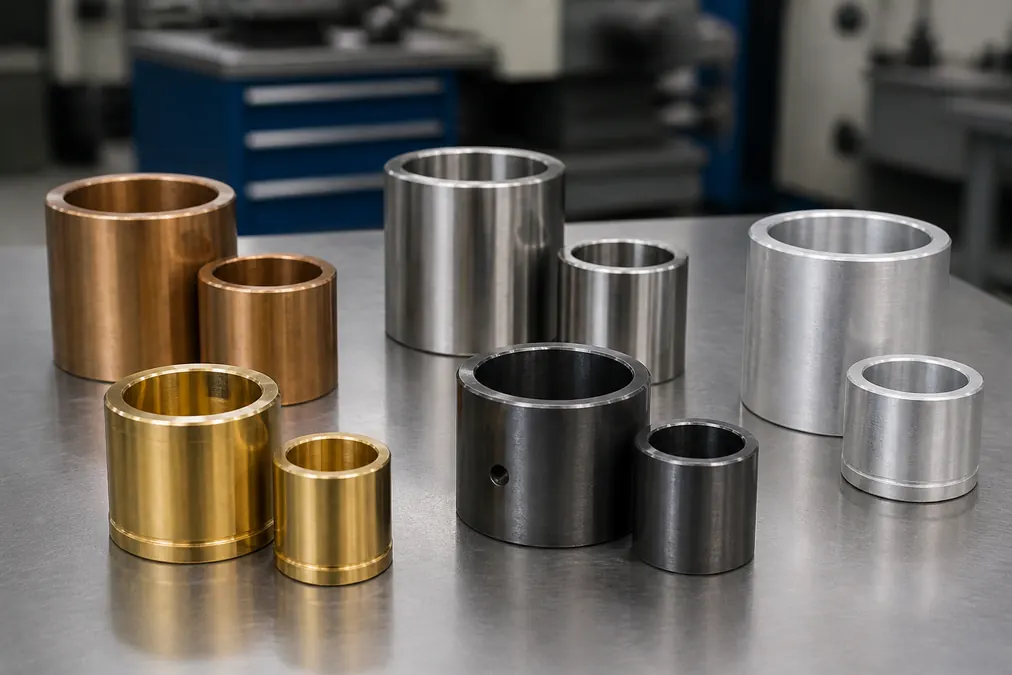 For anyone looking to integrate high-quality CNC bushings into their production, our team has decades of experience working with clients across aerospace, medical, automotive, and industrial sectors. We offer custom CNC bushing design, serialized traceability, and materials tailored to your specific environment-whether that's high temperature, dusty conditions, or biocompatible requirements. If you're working on a sheet metal project, our fabrication partners offer services that rely on this kind of precision: Precision Sheet Metal Fabrication here: /sheet-metal-fabrication-service/precision-sheet-metal-fabrication.html is a great resource for projects that demand tight-tolerance parts, and combining that with the right CNC bushings will take your finished products to the next level.
Don't let unassuming components hold your precision machining back. Reach out today to discuss your CNC bushing needs, and let's find the right solution to improve your part quality, reduce scrap, and keep your machines running reliably.
References
- Machining Data Handbook. (2022). "Precision Tooling Components for CNC Operations." Society of Manufacturing Engineers.
- Aerospace Quality Management Systems (AS9100) Requirements. (2021). "Tooling and Component Traceability Standards." SAE International.
- Medical Device Manufacturing Standards (ISO 13485). (2023). "Machining Component Precision and Biocompatibility." International Organization for Standardization.
- Sheet Metal Fabrication Best Practices. (2024). "Tooling Alignment and Consistency for Custom Enclosures." Fabricators & Manufacturers Association International.