

If you've ever reached the point where a standard off-the-shelf part doesn't cut it for your project-whether you're building a prototype for a medical device, fabricating a custom component for an aerospace application, or troubleshooting a unique industrial machine-you've probably asked yourself: How much do custom hardware parts really cost? As a custom hardware parts supplier with years of experience working across industries, I've fielded this question from engineers, small business owners, and R&D teams more times than I can count. The truth is, there's no one-size-fits-all answer, and that's by design. Custom parts are made to exact specifications, so their cost hinges on a mix of material choices, manufacturing methods, complexity, and even order volume. Let's break down what goes into pricing, share real-world examples, and give you a clear picture of what to expect when you're looking to invest in custom hardware.
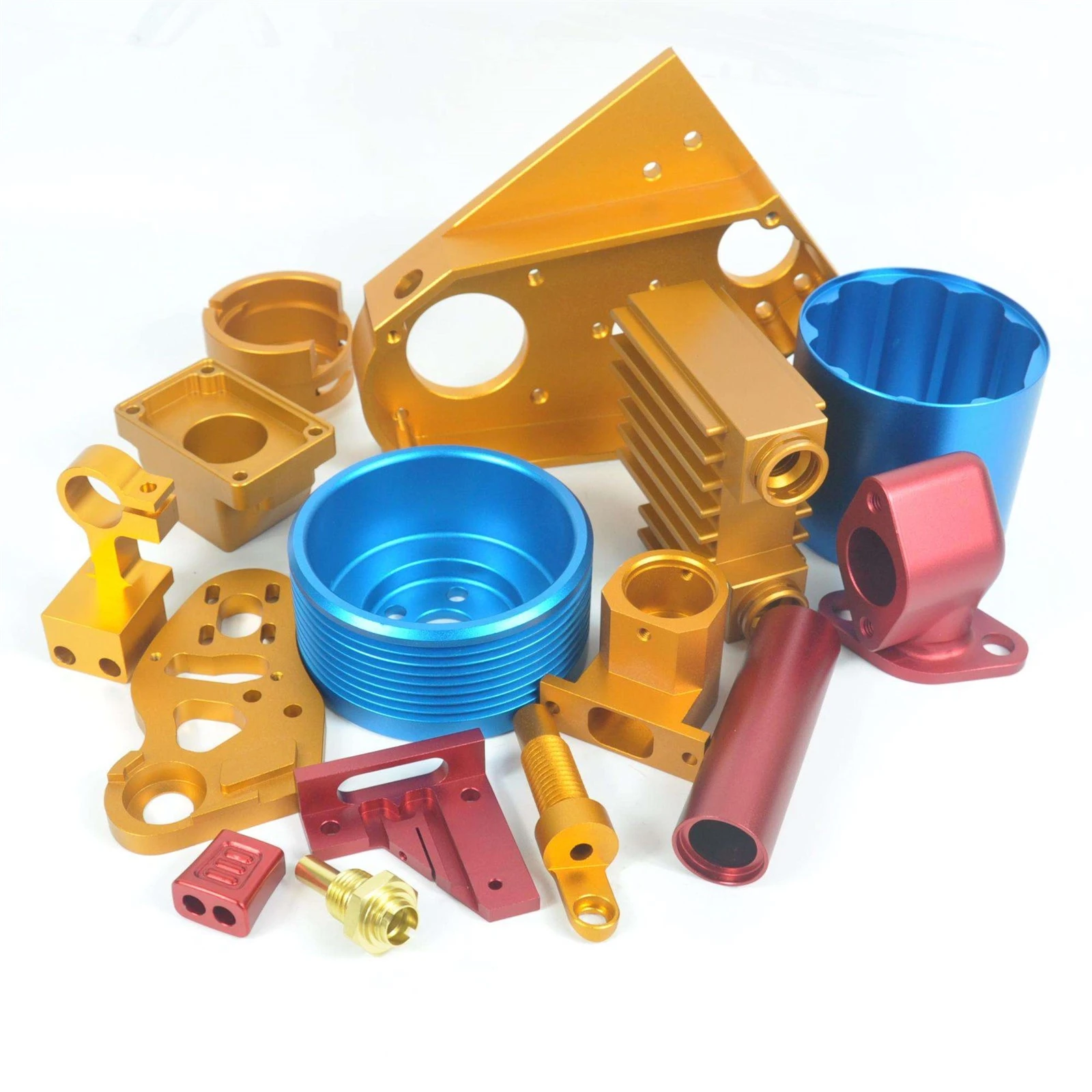
First, it helps to frame custom hardware as a balance between function and form. Unlike standard parts that are mass-produced in millions, each custom part is tailored to solve a specific problem. That means every decision made during the design and production process has a direct impact on cost. Let's start with the most fundamental factor: material selection. The raw material you choose is often the single biggest contributor to a part's base cost, and there's a wide range of options depending on your needs. For example, if you need a part that's lightweight yet durable for an aerospace project, you might opt for aluminum, but not just any aluminum. A gold anodized aluminum finish, which adds corrosion resistance and a precise, polished look, will cost more than a basic mill finish because the anodizing process is a separate, controlled step that requires specific chemicals and equipment. If strength is non-negotiable, you might choose a high-grade steel or titanium instead of aluminum, and those materials are significantly more expensive per pound. For fasteners like self-drilling screws, the material choice is equally critical: stainless steel self-drilling screws, which resist rust in outdoor or marine environments, cost more than carbon steel screws for indoor use, where corrosion isn't a concern. Even specialized parts like aircraft landing gear forgings rely on high-grade, heat-treated alloys that can withstand extreme stress, making their base material cost a major portion of their total price.
Next, the manufacturing method you choose plays a huge role in cost. Custom hardware parts are made using a variety of processes, from CNC machining to forging to 3D printing, and each has its own cost structure. CNC machining is one of the most common methods for custom parts, especially for prototypes or parts with tight tolerances. With CNC machining, a block of material is cut down to the exact shape you need using computer-controlled tools. The cost here depends on how complex the part's geometry is, how many operations are needed (like drilling, threading, or milling), and how long the machine takes to produce the part. For example, a simple CNC machined swivel joint with basic dimensions will take less time to machine than a swivel joint with multiple moving parts, sealed bearings, and tight rotational tolerances-so the more complex part will cost more. For parts that need to withstand very high loads, like aircraft landing gear forgings, forging might be the better option, but it has higher upfront costs because it requires custom tooling (like dies) to shape the metal. That upfront tooling cost is spread across the number of parts you order, so for small quantities, forging can be more expensive than CNC machining, but for large production runs, it becomes more cost-effective. Fasteners like high strength bolts are often produced using a process called heading, which is efficient for large orders but requires custom tooling, so the cost per bolt drops as order volume increases.
Order volume is another key factor that's easy to overlook when you're first looking at custom parts. A single prototype part will always cost more per unit than 1,000 of the same part, and that's because of fixed costs like setup, tooling, and engineering time. For example, if you need one custom self-drilling screw for a prototype, your supplier has to program the CNC machine, set up the tooling, and run a single part-all of which are labor-intensive, so that one screw will cost a lot. But if you order 10,000 of the same screw, the setup cost is spread across all 10,000 units, so the per-unit cost drops dramatically. The same goes for parts like CNC machined swivel joints: a single prototype might take 2 hours of machine time and require a full engineering review, while 100 of the same joint can be run in batches with minimal additional setup, cutting down per-unit cost significantly. That's why it's important to be as clear as possible about your order size from the start-suppliers can adjust processes to be more efficient for larger runs, which translates to better pricing for you.
Tolerances and surface finishes also add to cost, and these details can make or break a custom part's performance. Tolerance refers to how precise a part's dimensions need to be-for example, a part that fits perfectly into a tight assembly might need a tolerance of plus or minus 0.001 inches, which is very precise, while a part that's just a structural support might have a tolerance of plus or minus 0.010 inches. The tighter the tolerance, the more time and care the machining process takes, so the higher the cost. Surface finishes, like the gold anodized aluminum I mentioned earlier, or coating on high strength bolts, also add cost because they require extra steps. A basic machined part with a mill finish is ready to use right off the machine, but a part that needs a specific finish to resist corrosion, withstand high temperatures, or look a certain way will go through additional processing stages, each with its own labor and material costs. For example, a CNC machined swivel joint that needs a precision polished finish for smooth rotation will cost more than the same joint with a standard machined surface because polishing is a manual or semi-automated step that takes time.
To put this all into perspective, let's look at real examples of common custom hardware parts and their typical cost ranges, based on order volume and complexity. For a custom self-drilling screw, a single prototype might cost $5 to $15, depending on size and material, while a run of 1,000 screws would cost $0.50 to $2 each. For high strength bolts, a single prototype bolt might cost $3 to $10, and a run of 100 bolts would be $0.75 to $3 each. CNC machined swivel joints are more complex: a single prototype might cost $100 to $500, while a run of 50 joints would be $50 to $200 each. Parts like aircraft landing gear forgings are on the higher end due to their material and manufacturing complexity: a single prototype forging could cost $5,000 to $20,000, while a small production run of 10 forgings might be $2,000 to $10,000 each. Gold anodized aluminum parts, which combine material cost and finish, typically cost 20% to 50% more than the same part without anodizing, depending on the size and finish requirements. These ranges are general, of course-your actual cost will depend on your exact specifications, so it's always best to get a quote from a supplier that can review your design.
Now, if you're working on a custom project, there are a few things you can do to keep costs in check without sacrificing performance. First, be as specific as possible about your requirements, but don't overspecify. For example, if a tolerance of plus or minus 0.005 inches works for your assembly, don't ask for plus or minus 0.001 inches unless it's absolutely necessary-tightening tolerances that aren't needed will only add cost. Second, plan for volume if you know you'll need multiple parts in the future. Even if you only need one prototype now, asking about pricing for a larger run can help you decide if it makes sense to order more upfront to save money later. Third, work with a supplier that can offer advice on material and manufacturing methods. For example, if you thought you needed titanium for a part, your supplier might be able to recommend a high-grade aluminum alloy that meets your strength requirements at a lower cost. That's where a trusted custom hardware parts supplier adds real value-we don't just quote based on your design; we help you make smart choices that balance cost and performance.
I've seen too many projects go over budget because of last-minute design changes or unexpected costs from choosing the wrong manufacturing method. That's why transparency is key when working with a custom parts supplier. When you reach out for a quote, be ready to share your design files, order quantity, timeline, and any non-negotiable requirements (like material type, tolerance, or finish). The more information you provide, the more accurate the quote will be, and the fewer surprises you'll have down the line. For example, if you're building a medical device that needs parts to be biocompatible, you can specify that requirement from the start, so your supplier can work with materials that meet those standards without you having to pay extra for testing later.
At the end of the day, custom hardware parts are an investment in your project's success. A well-made custom part that fits perfectly, performs reliably, and lasts as long as it's supposed to will save you time and money in the long run, compared to trying to adapt a standard part that doesn't work. If you're ready to get a quote for your custom hardware parts, or just have questions about what options make sense for your project, reach out to discuss your needs. We work with clients across industries-from aerospace and medical to automotive and industrial-and we're here to help you find a solution that fits your budget and your goals.
References
- "CNC Machining Cost Factors: A Comprehensive Guide", Modern Machine Shop, 2023.
- "Custom Part Pricing: Key Variables to Consider for Machined Components", Manufacturing.net, 2022.
- "Aerospace Forging Cost Analysis: Material, Process, and Volume Impacts", Aerospace Engineering Magazine, 2021.
- "Fastener Cost Trends: Material, Coating, and Order Volume Effects", Fastener Technology International, 2023.